
About the Journal


Journal Title Journal of Animal, Food and Environmental Sciences (JAFES)
Editor in Chief Juliani, S.TP. M.Si
Publisher PT. Restorasi Lingkungan Indonesia
Frequency 2 issues per year (May and November)

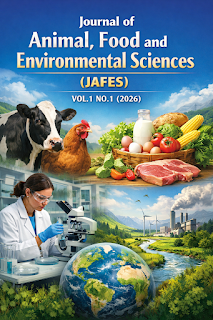
cover image

Journal of Animal, Food and Environmental Sciences (JAFES) is a peer-reviewed and open-access journal dedicated to advancing scientific knowledge and innovation in the fields of animal science, food science, and environmental science. The journal serves as a multidisciplinary platform for disseminating high-quality original research articles and review papers that contribute to the sustainable development of livestock production systems, food security, environmental management, and the One Health approach. JAFES accepts fundamental, applied, and interdisciplinary studies that address current challenges and emerging technologies in animal agriculture, food systems, and environmental sustainability. In addition, the journal encourages research that integrates biological, technological, ecological, agribusiness, and policy perspectives to support the Sustainable Development Goals while enhancing the resilience of agricultural and environmental systems worldwide.

In the field of Animal Sciences, the scope of the journal includes animal production and livestock management; animal breeding, genetics, and genomics; nutrition and feed science; as well as animal physiology, reproduction, and endocrinology. JAFES also covers topics related to animal health, veterinary medicine (various sub-disciplines), veterinary microbiology, virology, parasitology, epidemiology, as well as animal welfare, behavior, and ethics. Furthermore, its focus extends to precision livestock systems (smart farming), aquaculture and aquatic animal health, wildlife conservation and management, and the One Health approach and zoonotic diseases.

In the area of Food Sciences and Technology, the scope includes food chemistry and biochemistry; food microbiology and safety; food quality assessment and halal assurance; as well as food processing and preservation technologies. This field also encompasses research on functional foods, nutraceuticals, bioactive compounds, food biotechnology, innovative food products, post-harvest technologies, value-added products, food authentication, traceability, risk assessment, nutrition, food security, and sustainable food systems.

In Environmental Sciences, the scope focuses on environmental monitoring and assessment; environmental microbiology and biotechnology; the impacts of climate change on agriculture and ecosystems; biodiversity conservation; and ecosystem management. JAFES also welcomes studies on soil science, land management and restoration, water resource management, aquatic environments, waste management, recycling, resource recovery, renewable energy, bioenergy systems, environmental pollution, remediation technologies, ecological risk assessment, environmental health, and sustainable agriculture.

Finally, the journal embraces Interdisciplinary and Emerging Topics, which integrate agricultural and environmental biotechnology; bioinformatics, computational biology, and data analytics; geographic information systems (GIS) and spatial analysis; precision agriculture and digital technologies; and climate-smart agriculture. Topics related to agribusiness and policy studies concerning animal, food, and environmental systems, as well as integrated approaches supporting food security, ecosystem resilience, and the One Health initiative, are also an important part of the journal.

Overall, JAFES publishes studies involving livestock, companion animals, aquatic organisms, wildlife species, food products, agricultural systems, and natural environments. Every submitted manuscript must demonstrate scientific rigor, originality, and relevance to researchers, academics, industry professionals, policymakers, and practitioners. Through strengthened interdisciplinary collaboration and scientific knowledge exchange, JAFES is committed to making a meaningful contribution to sustainable animal production, safe and nutritious food systems, environmental protection, and global health.